Mini ATVs Are Small Machines That Still Need Serious Fit And Supervision
Mini ATVs can be fun, useful learning machines, but “small” does not make them harmless. A mini ATV may refer to a youth ATV, a small-displacement recreational machine, or a compact adult-friendly quad depending on the seller and model. The right choice depends on rider age, size, training, supervision, speed control, terrain, and the manufacturer’s warning labels. A good mini ATV makes control easier; it should never be treated like a toy.
A: Follow the manual and inspect sooner after harsh riding.
A: A new feel, sound, smell, leak, heat issue, or warning light.
A: Yes. Mud adds grit, moisture, heat, and hidden wear.
A: No. Restore the baseline first, then decide if upgrades are useful.
A: Yes, especially after water, rocks, towing, heat, or heavy loads.
A: Dates, hours, parts, fluids, settings, and symptoms are all useful.
A: Use caution on safety, sealing, steering, suspension, brake, and drivetrain parts.
A: Working does not mean healthy; inspect when symptoms change.
A: Get help for uncertain brakes, steering, wiring, fuel leaks, or structural issues.
A: Inspect early, fix small problems, and test before riding remote terrain.
Mini ATV Is A Broad Term
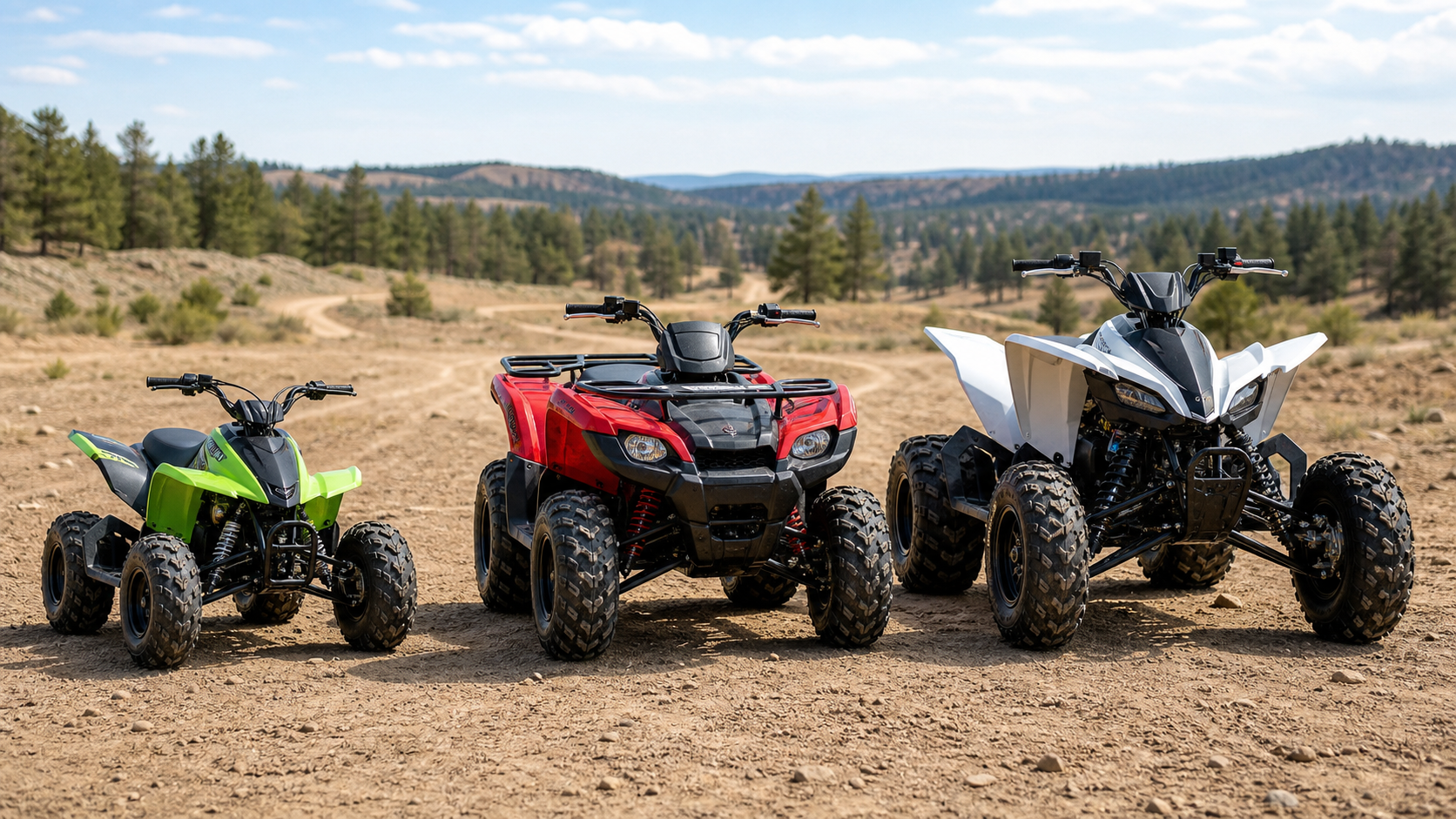
Mini ATV can mean several different things. In a family setting, it often means a youth ATV made for a child or young teen. In a used listing, it may mean any small quad. In some cases, it describes a compact machine for light adult use around a property or campsite. Because the term is informal, buyers should not rely on it when judging safety or suitability.
The real information is on the manufacturer’s label, owner’s manual, model name, engine size, speed-limiting features, and rider guidance. A seller calling something a mini four-wheeler does not prove that it fits a specific child, adult, or trail system.
Mini ATVs For Youth Riders
Youth ATVs are the most important part of this conversation because children need machines designed around age, size, strength, and supervision. Safety organizations and manufacturers warn against putting riders under 16 on adult-size ATVs. Adult machines can be too heavy, too fast, and too physically demanding even when a child can physically reach the controls.
A proper youth ATV should match the rider’s age range and the manufacturer’s guidance. It may include speed limiting, a smaller chassis, lighter weight, and controls sized for younger riders. None of that removes the need for supervision, protective gear, and training. A youth ATV is still a motorized off-highway vehicle.
Fit Is More Than Seat Height
Fit includes reach, posture, control strength, and movement. The rider should be able to steer fully, use the throttle and brakes comfortably, stand on the footrests, and shift body weight. They should also understand basic instructions and stop immediately when told.
Seat height alone can be misleading. A machine may seem low enough but still have controls that are too stiff or power delivery that is too abrupt. Parents and new riders should judge the entire control experience, not just whether the rider can sit on the ATV.
Compact ATVs For Adults
Some adults want a smaller ATV for easy property work, camp roads, flat trails, or simple transportation around private land. A compact ATV can be easier to store, trailer, turn around, and maintain. Lower weight can make the machine less intimidating and easier to recover if it gets stuck.
The limitation is capacity. Small ATVs may not have the suspension, brakes, cooling, towing rating, ground clearance, or power for heavy chores or rough terrain. A compact adult ATV should be chosen because it fits the job, not because it is the cheapest option available.
Electric Mini ATVs
Electric mini ATVs are increasingly common in youth and small recreational categories. They can be quiet and simple to operate, and some offer parental speed controls. Quiet operation can be nice around neighborhoods, camps, and private property, but quiet does not remove risk. A silent machine can still collide, tip, or surprise pedestrians.
Battery range, charging time, speed settings, water resistance, replacement parts, and brake quality matter. Parents should be especially cautious with unknown brands or toy-like machines that do not have clear support, documentation, or safety labeling.
Used Mini ATV Risks
Used mini ATVs can hide problems because they are often treated casually. Check brakes, throttle return, steering, tires, wheels, chain or drivetrain, frame, plastics, kill switch, battery, charger, fluids, and wiring. On gas models, check cold starting, idle, smoke, fuel leaks, and air filter condition.
Paperwork still matters. Verify the VIN or serial number, ownership documents, and local registration rules. Some small machines are sold with vague descriptions and limited parts support. A low price can become frustrating if basic replacement parts are difficult to find.
Where Mini ATVs Belong
Mini ATVs belong in controlled, appropriate areas. A beginner should practice on flat open ground before trails. Youth riders need direct adult supervision and should not ride near roads, traffic, steep terrain, water hazards, or adult machines moving at speed. Local rules may also restrict where youth or small ATVs can operate.
For adults, compact ATVs are best on light-duty routes. They are not substitutes for full-size utility machines, side-by-sides, or tractors. If a ride involves steep hills, deep mud, heavy loads, or remote terrain, a larger properly equipped ATV may be safer and more capable.
Maintenance And Storage
Small machines still need maintenance. Gas models need air filter care, oil service where applicable, chain adjustment, fuel attention, brake checks, tire pressure checks, and bolt inspection. Electric models need battery care, charger inspection, wiring checks, brake adjustment, and safe storage away from moisture and damage.
Because mini ATVs are often used by beginners, controls deserve frequent checks. A sticky throttle, weak brake, loose steering part, or underinflated tire can quickly create trouble for a rider with limited experience.
FAQ
Is a mini ATV a toy?
No. A mini ATV is a motorized off-highway vehicle and needs proper gear, supervision, maintenance, and a safe riding area.
Can adults ride mini ATVs?
Some compact ATVs can fit adults for light use, but youth ATVs are not designed for adult weight and should be used according to their labels.
What should parents check first?
Check the manufacturer’s age guidance, rider fit, speed controls, brakes, throttle return, protective gear, and training plan.
How To Size A Mini ATV In Real Life
The best sizing check is done with the rider in normal gear on level ground. The rider should be able to sit centered, turn the bars fully without leaning awkwardly, and stand on the footrests with knees slightly bent. Hands should reach the controls without stretching, and the rider should be able to use the brakes without shifting grip. If a child has to climb around the machine to control it, the ATV is too large or too demanding.
Parents should also watch how the rider reacts when the ATV moves. A rider who freezes, grabs too much throttle, looks at the front fenders instead of the path, or cannot follow stop instructions is not ready for more speed. That is not a failure; it is simply information. Mini ATVs are best introduced in short practice sessions where stopping, turning, and looking ahead become automatic before trail distractions appear.
Where A Mini ATV Makes Sense
Mini ATVs are strongest in controlled spaces: open fields, supervised practice loops, campsites with private routes, flat utility paths, and beginner riding areas. They are less suited to public roads, steep hills, deep mud, rocky terrain, and crowded mixed-use trails. A small chassis can bounce and deflect more sharply than a larger ATV, and smaller tires may catch ruts that a full-size machine rolls over.
For adults, a compact ATV can be useful for checking fences, moving light tools, riding around a hunting lease, or introducing a hesitant rider to off-road controls. It is not a substitute for a utility ATV if the job involves heavy trailers, big sprayers, steep grades, or all-day carrying capacity. Matching the ATV to the real job keeps the machine from being pushed beyond its design.
Ownership Details Buyers Forget
Small machines still need normal maintenance. Tires need air, chains need adjustment where fitted, brakes need inspection, batteries need charging, oil needs changing on gas models, and air filters need attention in dust. A neglected mini ATV can become harder to control than a larger machine that has been maintained well.
Parts support should be part of the purchase decision. A bargain mini ATV is not a bargain if brake pads, throttle cables, chargers, tires, plastics, or switches are difficult to find. For youth riders especially, a dependable machine with clear documentation is worth more than a flashy machine with no support. The safest mini ATV is one that fits the rider today, can be maintained tomorrow, and has enough support to stay predictable.
Mini ATV Red Flags
Some mini ATVs look appealing online because the price is low and the photos are clean. The warning signs usually appear in the details. Be cautious with machines that have no clear brand history, no manual, no parts diagram, no reliable brake parts, no working kill switch, or vague claims about rider age. A youth ATV also should not be modified to go faster simply because the rider is improving. Better skill should lead to better control, not removed safeguards.
Another red flag is a machine being sold as suitable for everyone. A compact ATV that fits a small adult may still be completely wrong for a child. A youth ATV that fits a child may be too cramped for an adult. The safest purchase is specific: specific rider, specific terrain, specific supervision plan, and specific maintenance support.