The Expanding World of All-Terrain Vehicles
All-terrain vehicles, commonly known as ATVs, have evolved from simple off-road machines into a diverse category of specialized vehicles designed for a wide range of activities. Today’s ATVs can serve as high-performance trail machines, hardworking tools on ranches and farms, or beginner-friendly vehicles that introduce young riders to outdoor adventure. Their ability to travel across challenging terrain makes them valuable in environments where traditional vehicles struggle to operate. Understanding ATV types is essential for anyone considering entering the world of off-road riding. Each category of ATV is designed around a particular purpose, and those design priorities shape everything from engine behavior and suspension geometry to cargo capacity and drivetrain configuration. Riders who understand these differences are better equipped to select a machine that matches their goals, terrain, and riding style.
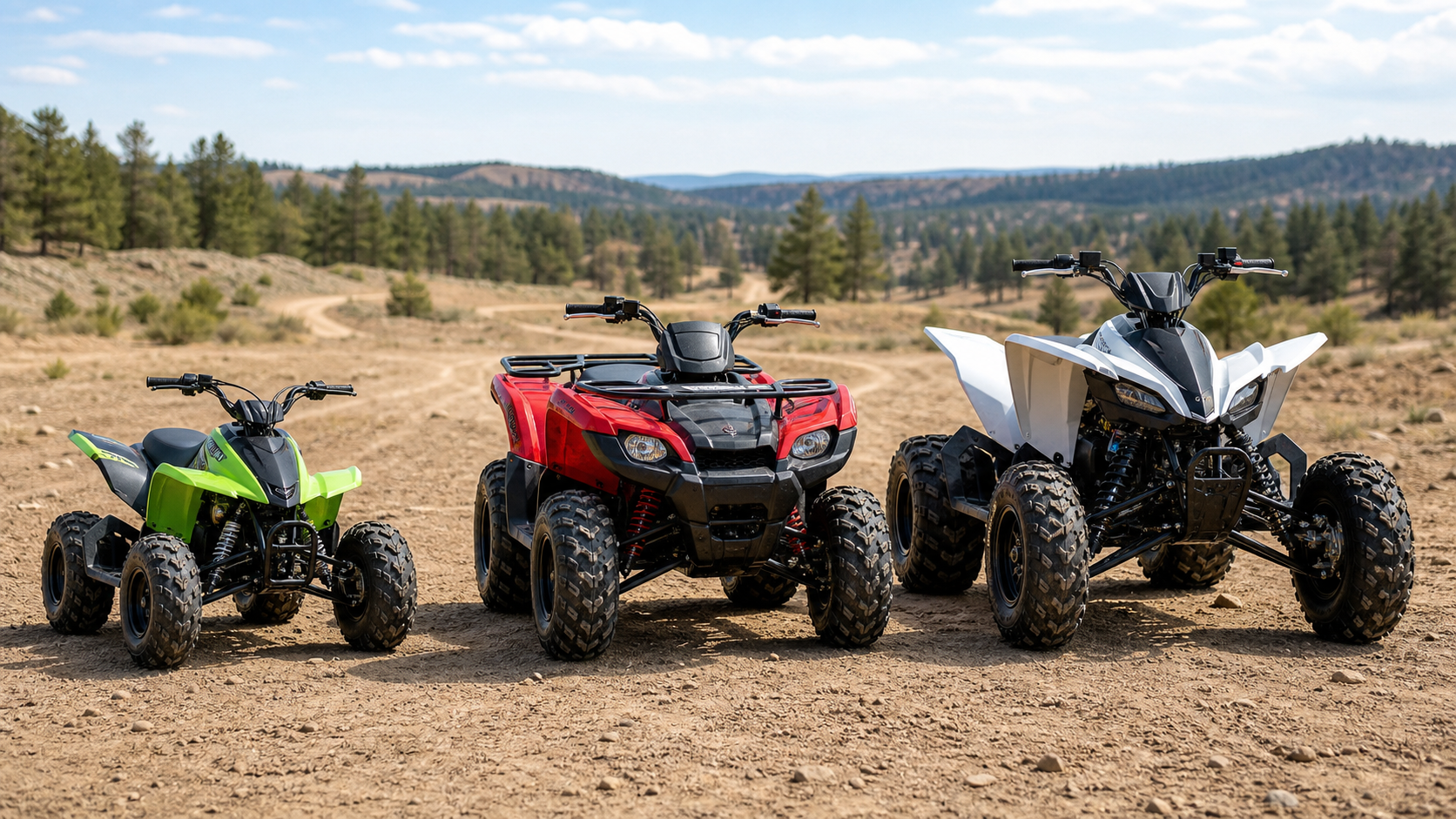
A: The main ATV types include sport, utility, youth, recreation, two-up, and electric models.
A: Smaller recreation ATVs, youth models, and easy-to-manage utility ATVs are often the best starting points.
A: Sport ATVs are best for speed, fast trail riding, and agile off-road handling.
A: Utility ATVs are best for towing, hauling, traction, and practical work on rough land.
A: Youth ATVs are smaller, lower-powered, and designed with safer, beginner-friendly controls.
A: A two-up ATV is a model specifically designed to carry both a driver and a passenger.
A: Yes, especially for riders interested in quiet operation and a simpler mechanical setup.
A: No, many utility ATVs do, but many sport ATVs stay with 2WD for lighter, sharper handling.
A: Some versatile recreation models come close, but most ATVs are still best when matched to their intended purpose.
A: Think about your terrain, experience level, riding goals, and whether you need performance, work ability, passenger space, or beginner-friendly features.
Why ATVs Are Designed in Different Categories
The diversity of ATV types reflects the many ways people use them. Some riders seek excitement and speed on twisting trails or open desert landscapes. Others rely on ATVs as daily work partners capable of transporting supplies and navigating large properties. Families may want machines that allow younger riders to participate safely in outdoor recreation.
Manufacturers respond to these varied needs by creating specialized ATV categories. Performance-oriented machines emphasize agility and acceleration, while work-focused models prioritize durability and towing capability. Entry-level models emphasize stability and ease of control. These differences allow riders to select machines tailored to specific tasks, creating a more satisfying and effective off-road experience.
Sport ATVs: Precision and Performance
Sport ATVs represent the high-performance side of the ATV spectrum. These machines are built to deliver excitement, responsiveness, and agility on challenging terrain. Riders who enjoy fast trail riding, sand dunes, or off-road tracks often choose sport models because they provide an energetic riding experience that rewards skill and precision.
One of the defining characteristics of sport ATVs is their lightweight design. Engineers focus on reducing weight while maximizing engine output and suspension responsiveness. The result is a machine that accelerates quickly and responds instantly to rider input. Sport ATVs typically feature low seating positions and aggressive suspension setups that allow riders to maneuver confidently through corners and uneven terrain.
Unlike many other ATV categories, sport models usually prioritize performance over practicality. Large cargo racks and towing features are rarely included because they would add unnecessary weight. Instead, every design decision centers on maximizing speed, handling, and rider engagement.
Utility ATVs: Power and Practicality
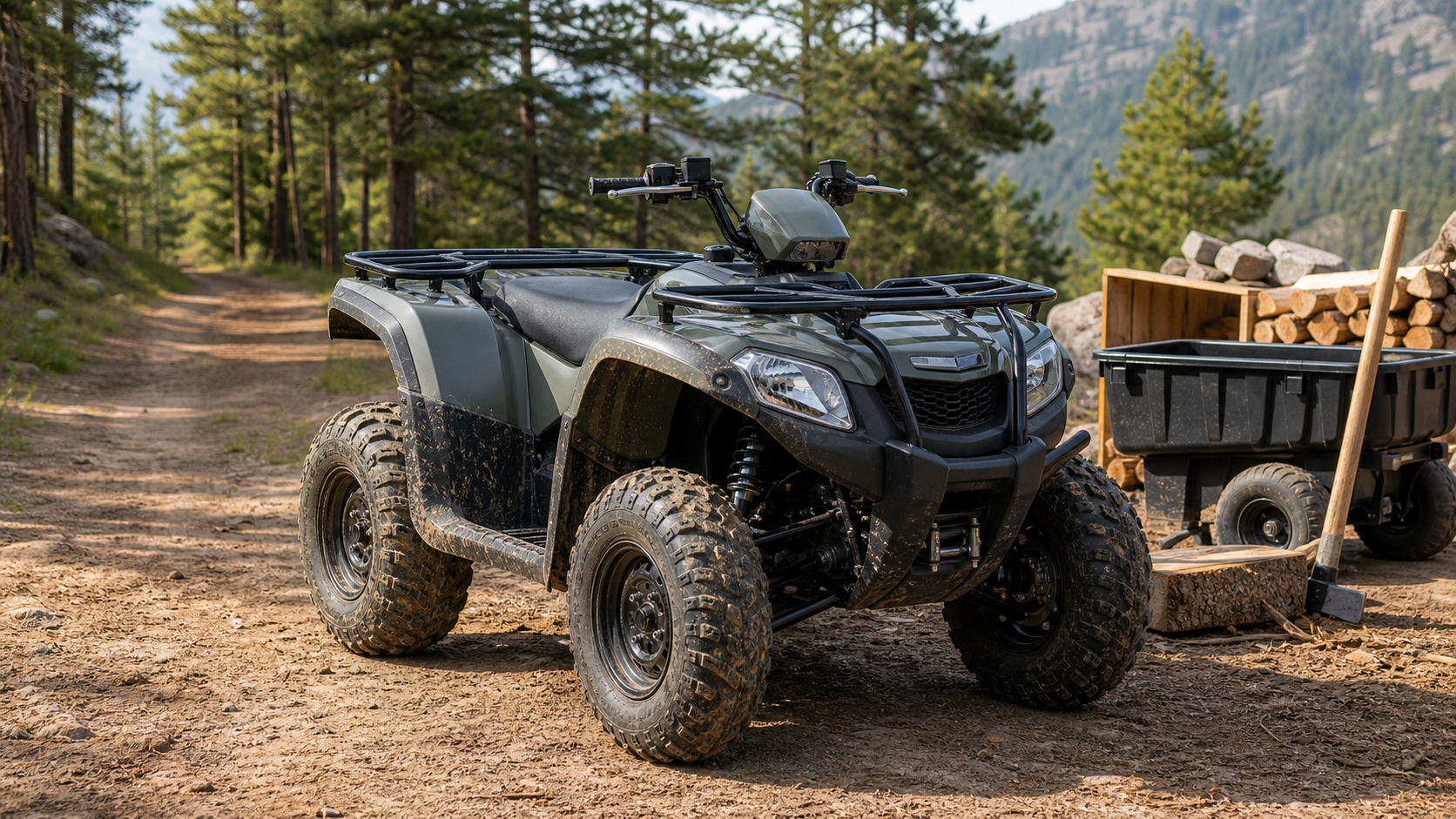
Utility ATVs are designed to handle demanding tasks in challenging environments. These machines are commonly used on farms, ranches, hunting properties, and remote worksites where reliable transportation across rugged terrain is essential. Their strength and versatility make them valuable tools rather than purely recreational vehicles.
A typical utility ATV includes front and rear cargo racks capable of carrying tools, feed, equipment, or supplies. Many models also feature tow hitches that allow them to pull trailers or small work implements. Combined with strong low-end engine torque and durable frames, these machines are capable of performing a wide variety of practical tasks. Four-wheel drive systems are another defining feature of utility ATVs. Selectable 4WD allows riders to engage additional traction when traveling through mud, snow, steep slopes, or loose soil. This capability ensures the ATV can maintain forward progress even when terrain conditions become difficult.
Youth ATVs: Building Skills Safely
Youth ATVs provide a gateway for younger riders to enter the off-road world in a safe and controlled way. These machines are smaller, lighter, and less powerful than adult models, allowing beginners to focus on developing riding skills without being overwhelmed by excessive power or complexity.
Manufacturers design youth ATVs with safety features that help parents and supervisors manage performance levels. Throttle limiters allow adults to restrict the ATV’s maximum speed while the rider gains experience. Lower seat heights make it easier for smaller riders to maintain balance, while simplified controls reduce the difficulty of learning how to operate the machine.
Youth ATVs are not simply scaled-down versions of adult models. Their geometry and power delivery are carefully engineered to create predictable handling and manageable performance. As riders grow and develop confidence, they can transition to larger machines that offer greater capability.
Recreation ATVs: Versatility on the Trail
Recreation ATVs occupy the middle ground between sport and utility models. These machines are designed for riders who want a versatile ATV capable of handling a variety of activities. Trail exploration, light work tasks, and recreational riding all fall comfortably within the abilities of this category.
Recreation ATVs typically offer balanced performance that prioritizes comfort and ease of use. They often include moderate cargo capacity while still maintaining a responsive and enjoyable riding experience. Many models feature automatic transmissions and user-friendly controls, making them appealing to beginners and experienced riders alike. Because of their flexibility, recreation ATVs are among the most popular choices for riders who want one machine that can serve multiple roles. A rider might spend a weekend exploring forest trails and later use the same ATV to transport supplies around a property.
Two-Up ATVs: Riding Together
Two-up ATVs are designed specifically to carry two riders safely. While many standard ATVs are built for a single rider, two-up models feature extended seats and reinforced frames that accommodate both a driver and a passenger comfortably.
These machines are often used for recreational trail rides, guided outdoor tours, and scenic exploration. The longer seating area allows both riders to maintain proper balance while traveling across uneven terrain. Dedicated passenger footrests and grab handles provide additional stability and safety.
Two-up ATVs are especially appealing for riders who want to share their off-road adventures. Whether exploring mountain trails or traveling across remote landscapes, these machines allow two people to experience the journey together.
Electric ATVs: The Emerging Frontier
Electric ATVs represent a growing segment within the off-road vehicle market. Powered by rechargeable batteries and electric motors, these machines offer a quieter and potentially lower-maintenance alternative to traditional gasoline-powered ATVs.
One of the most noticeable advantages of electric ATVs is their silent operation. Riders can travel through natural environments without the engine noise typically associated with off-road vehicles. This quiet performance can be particularly appealing for wildlife observation, hunting, or exploring peaceful outdoor settings. While electric ATVs are still evolving, advances in battery technology and motor efficiency are steadily improving their capabilities. As these innovations continue, electric models may become a more common presence within the broader ATV landscape.
Choosing the Right ATV Type
Selecting the right ATV depends on understanding how the machine will be used. Riders seeking excitement and performance often gravitate toward sport ATVs because of their speed and agility. Individuals who need a dependable work partner typically prefer utility models that provide cargo capacity and towing power.
For riders who want flexibility, recreation ATVs offer a balanced solution capable of handling a variety of tasks. Youth models provide safe entry points for younger riders, while two-up machines allow riders to explore trails together.
Terrain also plays an important role when selecting an ATV. A machine that excels on sandy dunes may behave very differently on muddy farmland or rocky mountain trails. Matching the ATV type to the riding environment helps ensure the machine performs as expected.
How ATV Technology Continues to Evolve
Modern ATV design continues to advance as manufacturers introduce new technologies and refine existing categories. Improvements in suspension systems, traction control, and drivetrain design allow today’s machines to handle terrain that would have challenged earlier generations of vehicles.
Hybrid designs are also becoming more common. Some models blend the agility of sport ATVs with the practical features of utility machines, creating versatile platforms that appeal to a wider range of riders. These innovations continue to expand the possibilities of what an ATV can accomplish. As the off-road industry grows, riders can expect to see even more specialized models designed for unique environments and riding styles.
The Adventure Behind Every ATV Type
The variety of ATV types reflects the incredible range of experiences these machines make possible. From racing across desert landscapes to hauling supplies across remote ranches, ATVs allow riders to explore places that would otherwise remain inaccessible.
Each category serves a different purpose, yet all share the same core mission: enabling riders to move confidently across challenging terrain. Whether the goal is excitement, productivity, or simple outdoor exploration, there is an ATV type designed to make that journey possible.
By understanding the differences between sport, utility, youth, recreational, and emerging ATV categories, riders can choose machines that align with their ambitions. The right ATV does more than transport a rider across rough ground—it opens the door to adventure, discovery, and a deeper connection with the outdoors.