Long-Range ATV Riding Is A Planning Problem Before It Is A Distance Problem
Expedition riding asks more from an ATV than a short trail loop. Fuel range, tires, weather, navigation, cargo balance, fatigue, communication, recovery gear, and maintenance all matter because small problems grow with distance. Riding smarter means proving the machine before departure, packing deliberately, keeping the group together, and turning around before fuel, daylight, or rider energy gets thin.
A: Follow the manual and inspect sooner after harsh riding.
A: A new feel, sound, smell, leak, heat issue, or warning light.
A: Yes. Mud adds grit, moisture, heat, and hidden wear.
A: No. Restore the baseline first, then decide if upgrades are useful.
A: Yes, especially after water, rocks, towing, heat, or heavy loads.
A: Dates, hours, parts, fluids, settings, and symptoms are all useful.
A: Use caution on safety, sealing, steering, suspension, brake, and drivetrain parts.
A: Working does not mean healthy; inspect when symptoms change.
A: Get help for uncertain brakes, steering, wiring, fuel leaks, or structural issues.
A: Inspect early, fix small problems, and test before riding remote terrain.
Start With A Realistic Route
Long-range ATV rides should begin with the route, not the accessory list. Distance, terrain, elevation, fuel access, water, weather, daylight, and legal access all shape the plan. A short route through rough country may be more demanding than a longer route on easy roads.
The route should include bailout points and turnaround times. If the group is behind schedule, a storm moves in, or fuel use is higher than expected, the plan should shrink before the problem becomes urgent. Expedition riding rewards margin.
Prove The ATV Before Departure
A long ride should not be the first test of new tires, racks, lights, clutching, fuel containers, or storage boxes. Load the ATV as it will be ridden and test it close to home. Check steering, braking, heat, rubbing, noise, and cargo movement.
Maintenance should be completed early enough for a shakedown ride. Tires, brakes, fluids, air filter, belt or chain, battery, lights, suspension, steering, cooling, and fasteners all deserve attention. Distance exposes neglected details.
Pack For Use, Not Fear
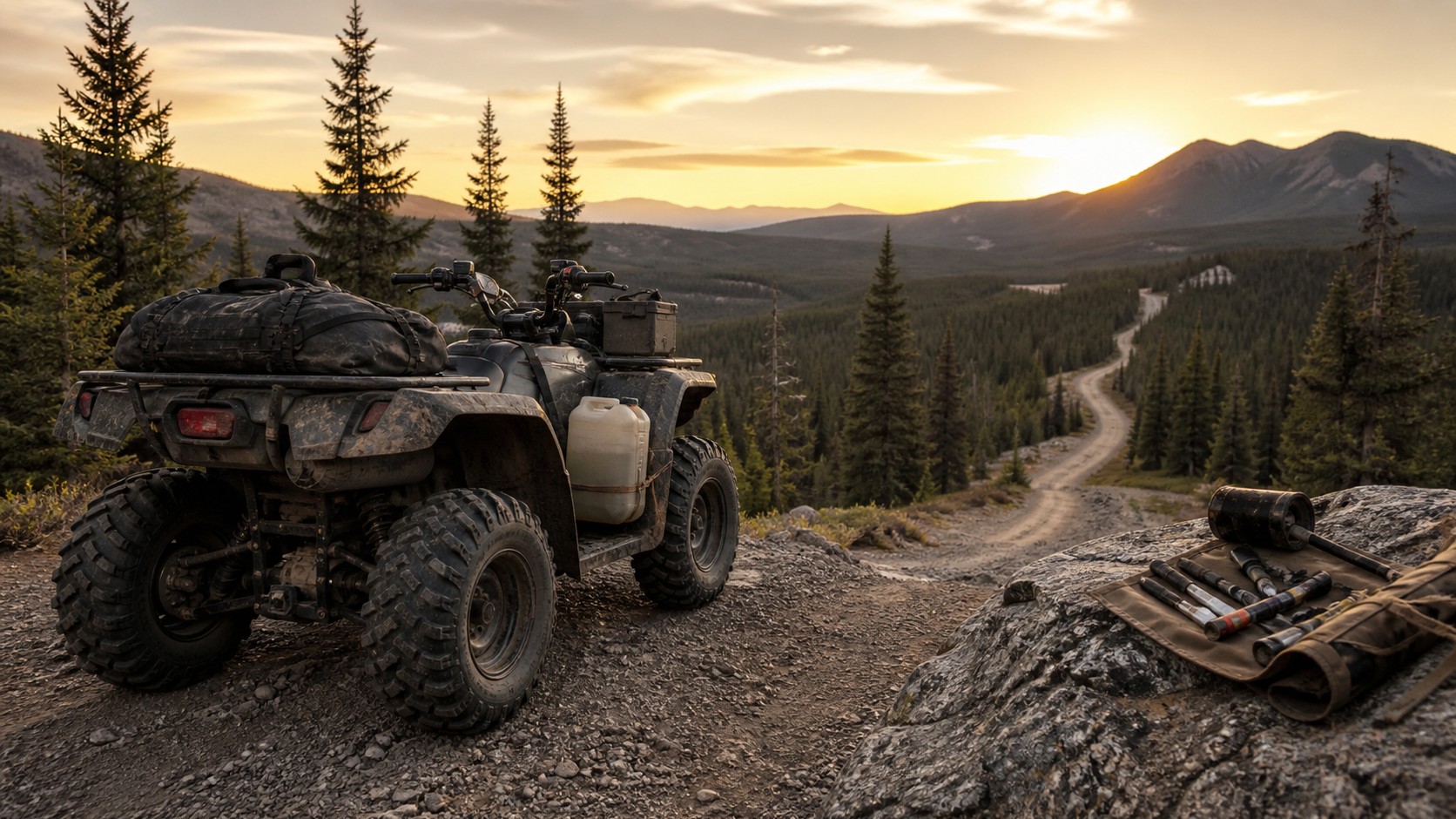
Expedition packing is a balance. Tools, tire repair, first aid, water, food, layers, communication, navigation, and recovery gear matter. Too much gear can overload racks and make the ATV harder to handle. The right kit solves likely problems without burying the machine.
Pack heavy items low and centered. Keep emergency gear reachable. Waterproof anything that must stay dry. Secure every strap so bags cannot shift into wheels, exhaust, controls, or the rider’s legs.
Fuel And Range Discipline
Range should be calculated conservatively. Sand, mud, snow, elevation, heavy cargo, wind, and slow technical sections can all increase fuel use. A rider should not plan on best-case mileage. Fuel margin is what protects the route when conditions change.
Extra fuel should be carried only in approved containers and mounted safely where legal. Fuel weight changes handling. The rider should know how much range the extra fuel actually provides and how the ATV feels with it installed.
Navigation And Communication
Do not depend on one device. A phone can fail, lose signal, run out of battery, or break. Offline maps, GPS tracks, paper maps, route notes, and known landmarks support each other. The group should know the route well enough to make decisions without panic.
Communication matters just as much. Radios may help groups stay together. Satellite communication may be appropriate in remote areas. Someone at home should know the planned route and return time.
Managing Fatigue
Long rides wear on riders through vibration, heat, cold, dust, dehydration, and constant decisions. Fatigue shows up as late braking, poor line choice, irritation, and sloppy cargo checks. Breaks should happen before the group feels spent.
Comfort upgrades can be worthwhile when they reduce fatigue. Grips, lever position, seat comfort, wind protection, hydration access, and dust management can matter more than engine power on a full-day ride.
Group Discipline
The least experienced rider and least prepared machine set the real limit. If one ATV has weak tires or one rider is tired, the route should adjust. Long-range riding is not successful because every planned mile was forced. It is successful because the group returns safely.
At stops, check fuel, straps, tires, rider condition, and daylight. These small pauses catch problems before they become the story of the trip.
Recovery And Repairs
Carry tools and spares that fit the actual ATV. Tire plugs, inflator, belt where applicable, chain items where applicable, fuses, tow strap, first aid, and basic fasteners are common examples. Know how to use them before the trip.
Recovery should happen from safe positions with rated gear and clear communication. Remote repairs should be moved away from slopes, water, blind corners, or traffic whenever possible.
After The Ride
After an expedition ride, inspect the ATV thoroughly. Check tires, wheels, brakes, fluids, filters, suspension, steering, racks, cargo mounts, cooling areas, and drivetrain. Long rides loosen and wear parts.
Restock supplies immediately. Replace used water, tire plugs, first-aid items, straps, or spares. The next ride should benefit from what the last ride taught.
Bottom Line
Expedition ATV riding is safer and more enjoyable when distance is treated with respect. Prove the machine, pack deliberately, plan range conservatively, communicate clearly, and keep enough margin to turn back.
A long-range setup should make the ATV reliable and the rider calmer. The best adventure is the one that does not depend on luck.
FAQ
What matters most for long-range ATV riding?
Reliability, fuel range, navigation, communication, balanced packing, and rider fatigue management.
Should I test gear before an expedition?
Yes. Test the ATV fully loaded before relying on it far from help.
How much fuel margin should I keep?
Plan conservatively and keep enough reserve for terrain, delays, detours, and return distance.
Practical Expedition Scenarios
A long forest loop needs different planning than a desert crossing or mountain connector. In forest terrain, riders may need more attention to intersections, wet roots, and changing visibility. In desert terrain, heat, dust, water, and navigation move higher on the list. In mountains, weather, elevation, rocks, and daylight can become the limiting factors.
The ATV setup should match the hardest normal part of the route, not the easiest miles. If the route includes one remote rocky pass, tire repair and recovery gear matter even if most of the ride is smooth. If the route includes long dry sections, water and fuel planning deserve more space than comfort accessories.
A rider should also think about the return trip. It is easy to spend fuel, daylight, and energy reaching a destination, then realize the ride back has the same demands. Expedition planning is complete only when the return has enough margin too.
What To Do When The Plan Changes
Every long ride should expect change. A gate may be locked, a trail may be washed out, weather may move faster than forecast, or a rider may become tired earlier than expected. The group should know how to shorten the ride without debate. Alternate exits are part of a good route, not evidence that the plan failed.
When conditions change, avoid stacking risks. Low fuel, fading daylight, tired riders, and unknown terrain should not be accepted together. One risk may be manageable; four risks create a trip that depends on luck. Turning back early is often the choice that protects the next ride.
Expedition Maintenance Mindset
Expedition maintenance begins before the trip and continues during it. Check straps, tires, heat, fuel, and rider condition at stops. Listen for new sounds. Feel whether brakes or steering are changing. Small checks take little time and prevent the group from ignoring early warnings.
After the ride, service should happen while the trip is still fresh. If the ATV ran hot, used more fuel than expected, rubbed a tire, loosened a box, or felt unstable with the load, write it down and fix it. Long-range riding improves when every trip teaches the next setup.
Bottom Line For Long-Range Riding
The smartest expedition riders are not the ones who carry the most gear. They are the ones who carry the right gear, test it, and leave enough margin for weather, fatigue, fuel, and mechanical issues. A balanced ATV and a clear plan beat an overloaded machine.
Distance makes preparation visible. If the ATV is reliable, the load is organized, and the group communicates well, long rides feel adventurous instead of fragile. That is the standard to build toward.
Expedition Mistakes To Avoid
One mistake is packing for every possible problem while ignoring weight. An overloaded ATV handles worse, brakes longer, and tires the rider. Another mistake is trusting best-case fuel range. Soft terrain, hills, cargo, and detours can change consumption quickly.
A third mistake is letting the group spread too far apart. If a rider breaks down or takes a wrong turn, distance becomes a problem. Regroup points, radios, and simple rules keep the ride organized without making it rigid.
The final mistake is postponing maintenance until after the big ride. Long-range preparation should happen early. That leaves time to fix issues and test the ATV again before the route demands trust.
Final Long-Range Readiness Check
Before a long-range ride, the rider should be able to point to every critical item and explain why it is packed. Tire repair should match the tires. Tools should fit the ATV. Fuel should be mounted safely. Water should be enough for delays, not only the planned ride. Navigation should work offline. Communication should not depend on luck.
The ATV should also be ridden with the full load before the real trip. That test should include braking, slow turns, bumps, hills if available, and enough time to notice heat or rubbing. If cargo shifts, straps loosen, or steering feels awkward, the setup needs work before distance is added.
A long-range ride is successful when the machine, rider, and route all keep margin. The group should return with notes about what to adjust, not stories about preventable failures. That is how expedition experience becomes better preparation instead of just a long memory.
Practical Examples
Example: a rider planning a 70-mile loop should not only ask whether the ATV can travel 70 miles in ideal conditions. They should ask what happens if mud adds drag, a trail closure adds ten miles, or a tire repair costs an hour of daylight. The route should still make sense after one or two ordinary problems.
Example: a loaded ATV that steers lightly or feels top-heavy near home should not be trusted deeper into remote terrain without changes. Repack the load, remove nonessential gear, or choose a shorter route. Expedition packing is successful when the machine still feels like an ATV, not a storage rack with wheels.
Example: if one rider in the group has a smaller fuel tank or less experience, that rider sets the practical pace and range. Planning around the strongest machine leaves the weakest point exposed. Good groups protect the limit before it becomes a problem.