Mountain ATVs Need Control, Traction, And Braking More Than Bragging Rights
Mountain ATV riding exposes every weakness in a machine and rider. Steep climbs, loose rock, switchbacks, sidehills, altitude, sharp ledges, and long descents demand smooth power, strong brakes, stable suspension, appropriate tires, and careful line choice. A mountain ATV should help the rider stay controlled when gravity, traction, and fatigue all start working against them.
A: Follow the manual and inspect sooner after harsh riding.
A: A new feel, sound, smell, leak, heat issue, or warning light.
A: Yes. Mud adds grit, moisture, heat, and hidden wear.
A: No. Restore the baseline first, then decide if upgrades are useful.
A: Yes, especially after water, rocks, towing, heat, or heavy loads.
A: Dates, hours, parts, fluids, settings, and symptoms are all useful.
A: Use caution on safety, sealing, steering, suspension, brake, and drivetrain parts.
A: Working does not mean healthy; inspect when symptoms change.
A: Get help for uncertain brakes, steering, wiring, fuel leaks, or structural issues.
A: Inspect early, fix small problems, and test before riding remote terrain.
Why Mountain Riding Is Different
Mountain riding asks more from an ATV than flat trail riding. The machine has to climb, descend, cross loose surfaces, turn on narrow routes, and stay stable when the rider is tired. A small mistake can carry bigger consequences because recovery may be difficult and help may be far away.
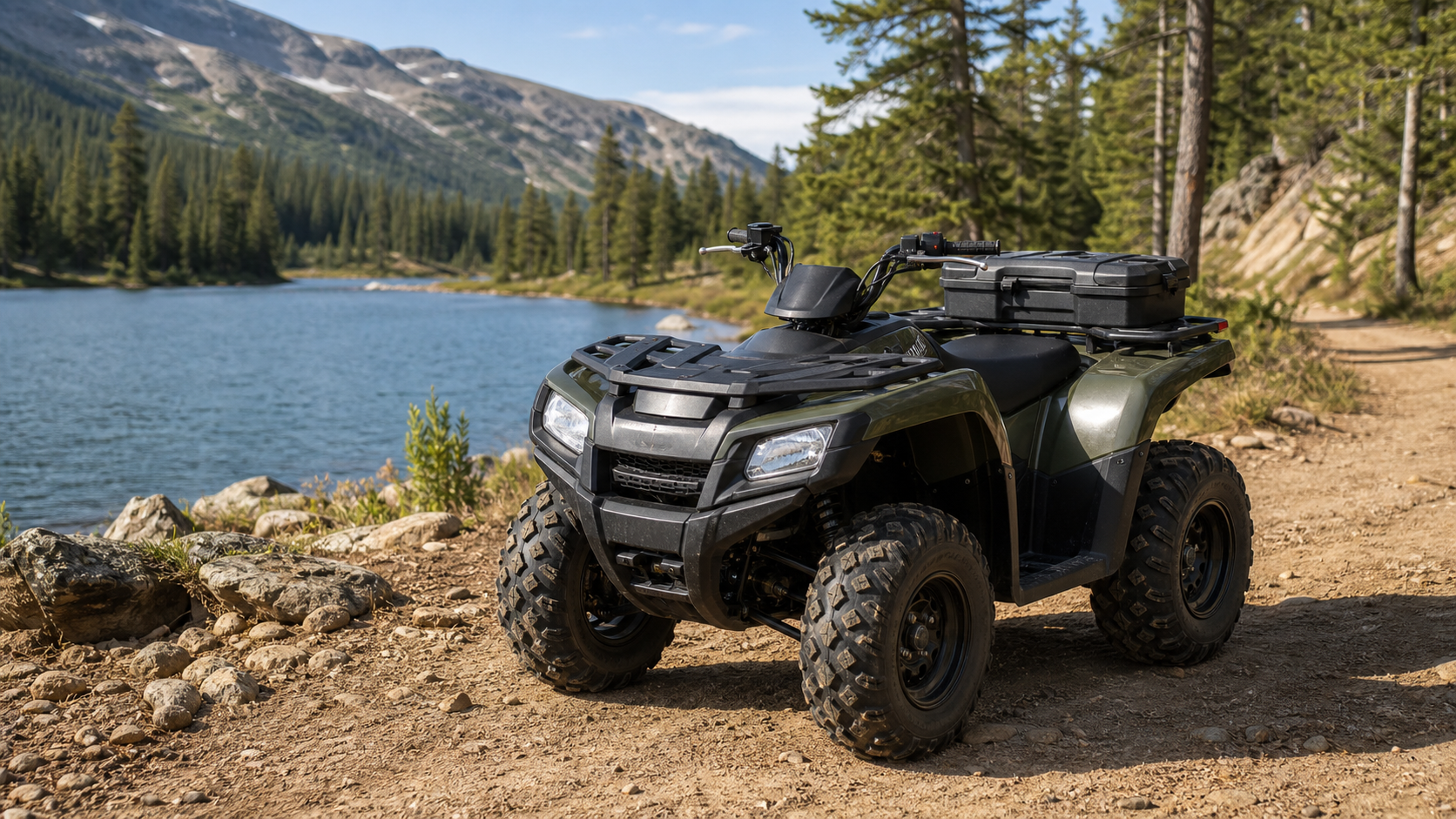
The best mountain ATV is not always the largest or fastest model. It is the one with predictable power, good tires, strong brakes, healthy suspension, and enough traction to move slowly without drama. Control matters more than show.
Climbing Requires Smooth Power
Steep climbs reward smooth throttle. Too little power can stall momentum, but too much can break traction, lift the front end, or send the ATV off line. Selectable 4WD and low range can help because they let the machine pull steadily instead of relying on speed.
Rider position matters. Moving weight forward on climbs helps keep the front end planted. Standing can let the ATV move under the rider and absorb bumps. If a climb looks uncertain, it is better to stop and choose another route than to attack blindly.
Descending Requires Brake Discipline
Long descents are where mountain riders learn whether their brakes are healthy. Pads, rotors, fluid, calipers, and engine braking all matter. Riding the brakes constantly can build heat and reduce stopping feel. The rider should descend slowly, use low range or engine braking when appropriate, and avoid panic stops on loose surfaces.
Brake checks before the ride are essential. A soft lever, weak pedal, dragging brake, or grinding sound should be fixed before entering steep terrain. Downhill problems give the rider less time to improvise.
Tires, Clearance, And Protection
Mountain trails can include rock shelves, roots, shale, loose dirt, mud, snow patches, and sharp debris. Tires need sidewall strength and tread that grips without making steering unpredictable. Too much air can reduce traction. Too little can risk rim damage or tire roll. Riders should follow safe pressure ranges and adjust thoughtfully.
Skid plates and A-arm guards can protect the underside when rocks are common. Ground clearance helps, but lifting an ATV too much can reduce stability. A mountain setup should protect the machine while keeping the center of gravity reasonable.
Altitude, Cooling, And CVT Load
High elevation can reduce engine power, especially on naturally aspirated machines. Slow technical climbs can also heat engines, belts, and brakes. Cooling systems need clean radiators, working fans, correct coolant, and clear airflow. A clogged radiator on a slow climb can turn into an expensive problem.
CVT-equipped ATVs should use the correct range for the job. Lugging in high range during slow climbs or loaded work can create belt heat. If the ATV smells hot, loses response, or shows warning lights, stop and inspect instead of pushing deeper into the route.
Weight And Cargo
Mountain riders should pack carefully. Tools, water, food, layers, first aid, tire repair, tow strap, and communication gear are useful, but weight changes handling. Heavy cargo high on a rack can make sidehills and climbs more dangerous.
Secure everything. Loose gear can shift during a climb, fall into controls, or bounce off the machine. Keep heavy items low and balanced when possible, and avoid carrying more than the ATV is rated to handle.
Trail Judgment
Mountain terrain changes with weather. A route that was easy when dry can become slick after rain or snowmelt. Loose rock can move, ruts can deepen, and shaded ice can remain after sunny sections look clear. Good riders turn around before the trail forces the decision for them.
Respect closures and fragile terrain. Alpine and mountain environments recover slowly from damage. Staying on legal routes protects the land and keeps access open for responsible riders.
Choosing Lines In Mountain Terrain
Mountain riding starts before the tires reach the obstacle. A rider should look ahead, identify loose rock, ruts, ledges, washouts, roots, and off-camber sections, then choose a line that keeps the ATV balanced. The cleanest line is not always the shortest. Sometimes the safer path is slower, wider, or less dramatic.
Momentum helps, but too much momentum creates new risk. Charging a climb can break traction or make the ATV bounce off line. Creeping too slowly can stall the climb and force an awkward stop. The best pace keeps the tires hooked up while leaving the rider enough time to react.
Sidehills And Switchbacks
Sidehills are one of the most serious mountain hazards because gravity is constantly pulling the machine downhill. The rider should keep weight uphill, move smoothly, and avoid sudden steering or throttle. If the trail feels too off-camber, turning around early is better than trying to save a bad angle later.
Switchbacks require patience. A long-wheelbase or heavy ATV may not turn tightly without careful positioning. Riders should slow down before the turn, look through it, and avoid climbing the bank or dropping the downhill wheels into loose edges. If a turn requires backing, choose a stable place and move deliberately.
Group Riding In The Mountains
Mountain group rides need spacing and communication. Riders should avoid following too closely on climbs because a stalled ATV can roll or slide back. Dust, blind corners, and narrow trails make spacing important. The group should stop at intersections so no rider gets lost.
Recovery plans matter. A winch, tow strap, first aid kit, tools, tire repair kit, air compressor, and communication device are more useful in the mountains than extra speed parts. Riders should know who has gear and how to use it before something goes wrong.
Respecting The Machine
Mountain terrain is hard on an ATV. Long climbs heat engines and belts. Long descents heat brakes. Rocks punish tires, wheels, skid plates, and suspension. Dust loads air filters. After a mountain ride, inspect the machine rather than parking it dirty and hoping it is fine.
Check brake feel, tire damage, wheel bends, loose bolts, leaks, CV boots, skid plates, steering, and suspension. A small mountain impact can loosen parts that only fail on the next ride.
Final Buying Filter
The best mountain ATV is predictable, not theatrical. Choose traction, braking, cooling, protection, and rider fit before chasing the biggest engine. A machine that can move slowly with control will usually be safer and more useful than one that only feels impressive on flat ground.
What To Avoid In A Mountain ATV Setup
Some upgrades that look rugged can hurt mountain performance. Very tall lifts can raise the center of gravity. Oversized tires can strain brakes and driveline parts. Heavy cargo boxes can make sidehills feel worse. Loud exhaust does nothing to improve traction and can create access problems on shared land.
A mountain ATV should stay balanced. Moderate tires with strong sidewalls, skid protection, healthy brakes, power steering if available, and smooth low-speed control are usually more useful than extreme changes. Reliability matters because mountain recovery is difficult.
Used Mountain ATV Inspection
A used ATV that lived in rocky country deserves a careful underside inspection. Look at skid plates, A-arms, frame rails, footwells, wheels, tie rods, brake lines, and differential housings. Rock hits can bend or crack parts that are easy to miss when the machine is muddy.
Test steering and brakes slowly before trusting the ATV on grades. Listen for clicking CV joints, clunking suspension, grinding brakes, and loose bearings. Mountain riding punishes weak parts, so a used machine should feel tight and predictable.
Final Preparation Checklist
Before a mountain ride, check brakes, tires, fluid levels, lights, winch, tow strap, tool kit, first aid, navigation, water, food, and weather. Tell someone where the group is going and when it should return. If the ride crosses public land, confirm the route is open to ATVs.
The best mountain riders are patient. They stop to inspect obstacles, help the group through difficult sections, and turn around before the risk stops being worth it. A good ride is one everyone finishes safely.
When A Smaller ATV Is Better In The Mountains
A smaller or mid-size ATV can be the better mountain choice when trails are narrow, switchbacks are tight, and recovery space is limited. Less weight helps the rider correct mistakes, turn around, and manage awkward sections. A large engine is useful only when the chassis, tires, brakes, and rider can use it safely.
This is especially true for newer mountain riders. A predictable mid-size 4WD ATV with good tires, skid protection, and healthy brakes can build more confidence than a powerful machine that feels heavy on sidehills and descents.
FAQ
Is 4WD necessary for mountain ATV riding?
It is not always required, but selectable 4WD is very useful for loose climbs, rocks, mud, snow patches, and slow technical terrain.
What tires are best for mountain ATVs?
Strong all-terrain or rocky-terrain tires with good sidewalls are often better than extreme mud tires for mixed mountain routes.
Why do brakes matter so much in mountains?
Long descents create heat and demand consistent control. Weak brakes can become dangerous quickly on steep terrain.