Paddle Tires And Knobby Tires Give Dune Riders Very Different Feel
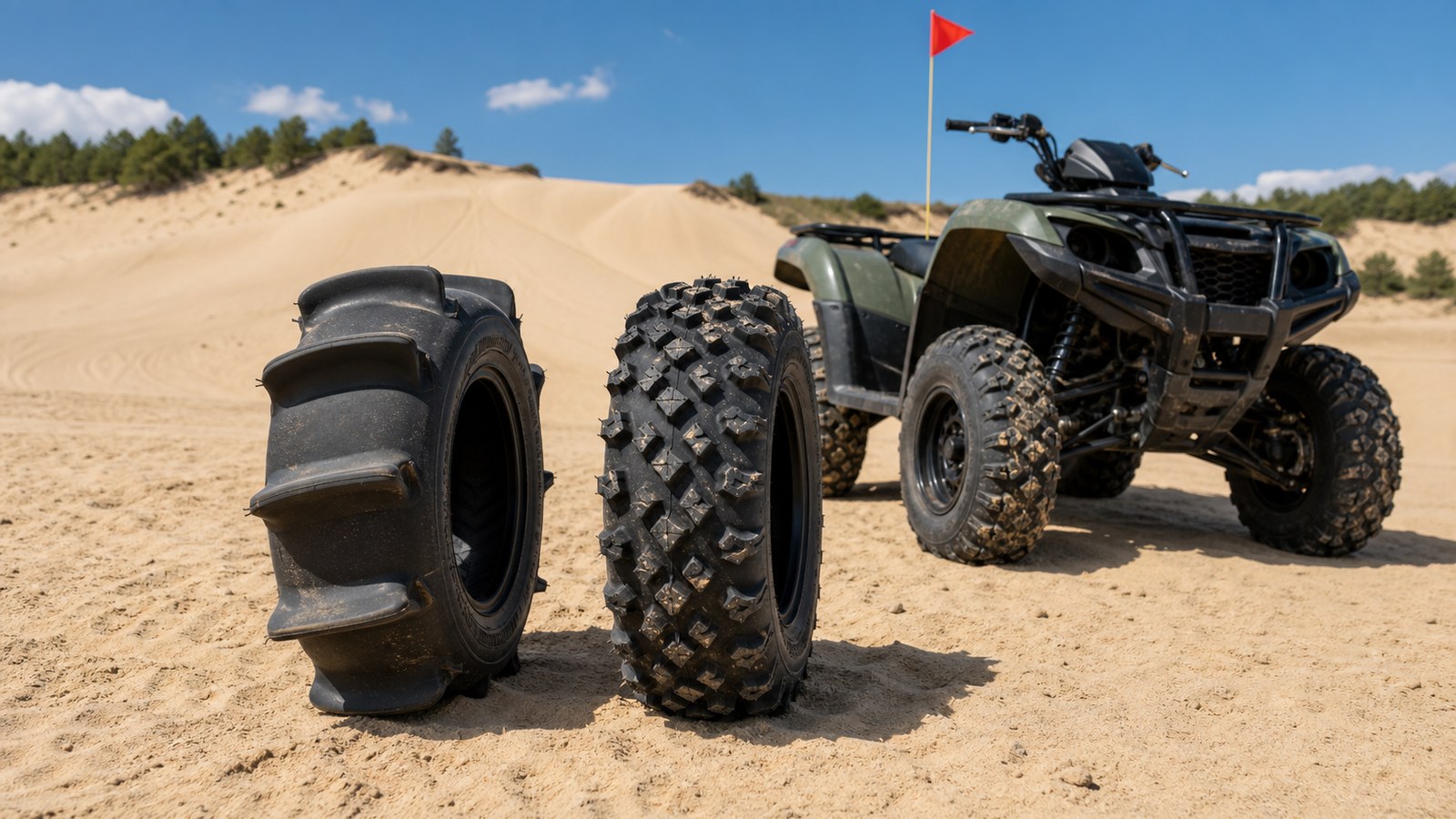
Paddle tires are designed to scoop sand and drive an ATV forward in soft dunes. Knobby tires are designed for mixed dirt, rocks, hardpack, and general trail traction. In pure sand, paddles can transform acceleration and climbing. On mixed desert routes, knobbies may be more practical and controllable. The right choice depends on how much of the ride is open dune sand versus hard, rocky, or mixed terrain.
A: Follow the manual and inspect sooner after harsh riding.
A: A new feel, sound, smell, leak, heat issue, or warning light.
A: Yes. Mud adds grit, moisture, heat, and hidden wear.
A: No. Restore the baseline first, then decide if upgrades are useful.
A: Yes, especially after water, rocks, towing, heat, or heavy loads.
A: Dates, hours, parts, fluids, settings, and symptoms are all useful.
A: Use caution on safety, sealing, steering, suspension, brake, and drivetrain parts.
A: Working does not mean healthy; inspect when symptoms change.
A: Get help for uncertain brakes, steering, wiring, fuel leaks, or structural issues.
A: Inspect early, fix small problems, and test before riding remote terrain.
What Paddle Tires Do
Paddle tires use raised scoops across the tire to push against soft sand. On a dedicated dune ATV, they can improve launch, climbing, and forward drive dramatically. They help the machine stay on top of sand instead of spinning down into it.
Paddles are specialized. They are poor choices for rocks, pavement, gravel, and hardpack because the paddles can wear quickly and handling can feel awkward. Most riders use them for dedicated sand trips, not all-purpose riding.
What Knobby Tires Do
Knobby tires use individual tread blocks to bite into dirt, gravel, hardpack, rocks, and mixed trails. They are more versatile than paddles and better for desert rides that include hard sections. They can still work in sand, especially when the sand is firm or the rider maintains momentum.
Their weakness is very soft dune sand. Knobbies may dig instead of drive, especially on climbs. A rider who spends most of the day in open dunes will usually prefer paddles.
Front Tire Choices
Rear tires get most of the attention, but front tires affect steering. Dedicated sand fronts may use ribs or smoother shapes to float and guide the ATV without digging. Knobby fronts can push or knife in soft sand, but they are better when the ride includes hard or rocky terrain.
Matching front and rear purpose matters. Rear paddles with ordinary fronts can work for some riders, but steering feel may not be ideal. Mixed routes may justify keeping more versatile fronts.
Machine Load And Clutching
Paddles can increase load on the engine and drivetrain because they bite hard in sand. Tire height and paddle count affect how much work the machine does. A mild ATV with oversized paddles may feel bogged down or hard on belts and clutches.
Dedicated dune riders may adjust gearing or clutching. Casual riders should choose conservative sizes and test carefully. The goal is better sand control, not a setup the ATV struggles to turn.
Riding Technique In Sand
Sand rewards momentum, smooth throttle, and good line choice. Abrupt throttle can dig holes. Chopping throttle on a climb can stop the ATV where restarting is difficult. Blind crests require caution because other riders or sharp drops may be on the other side.
Paddles improve traction, but they do not remove the need for skill. Knobbies require even more attention to momentum in soft areas. In both cases, the rider should practice before tackling tall dunes.
Mixed Desert Trips
Many dune areas include access roads, hardpack, rocky connectors, camps, and staging areas. Paddles can be inconvenient or damaging on these surfaces. Riders may bring spare wheels or choose a more versatile tire when the trip includes significant non-sand riding.
Knobbies make sense when the route changes often. They may give up some soft-sand performance, but they keep the ATV more manageable across the whole day.
Buying Advice
Choose paddles for dedicated dune riding with enough engine and drivetrain support. Choose knobbies for mixed desert and trail rides. Choose front tires based on how much steering float versus hard-surface control you need.
Do not choose by appearance alone. A paddle setup that looks serious may be wrong for a mild ATV or mixed terrain. Tire choice should improve control.
Bottom Line
Paddle tires win in soft dunes because they are built for sand drive. Knobby tires win when the ride includes dirt, rocks, hardpack, and trail variety.
The right tire depends on the whole route, the ATV’s power, and the rider’s skill. Match the tire to the terrain and the machine will feel more predictable.
FAQ
Can I use paddle tires on hardpack?
It is not recommended. Paddles wear quickly and handle poorly on hard or rocky surfaces.
Are knobbies okay in dunes?
They can work in firm or mixed sand, but dedicated paddles are better in soft open dunes.
Do paddles require clutch tuning?
Sometimes, especially with larger paddles or lower-powered ATVs. Test carefully and watch for bogging or belt heat.
When To Own Two Tire Sets
Riders who split time between dunes and mixed desert often benefit from two tire sets. Paddles can be mounted for dedicated sand trips, while knobbies or all-terrain tires stay ready for trail riding. This costs more upfront, but it prevents one specialized tire from being forced into the wrong terrain.
Two sets also preserve tire life. Paddles wear quickly on hard surfaces, and knobbies may disappoint in deep sand. Swapping wheels for the trip can be easier than accepting poor performance all day.
How Paddle Count And Size Matter
Paddle tires vary in height, width, paddle count, and paddle shape. More paddle is not always better. Too much bite can bog a mild ATV, strain the clutch or belt, and make the machine harder to keep in the power. A balanced paddle lets the engine pull cleanly without feeling overloaded.
The right size depends on engine output, gearing, rider weight, and sand conditions. Casual riders should be conservative and ask experienced local riders or dealers what works on similar machines. Dune setups are often regional because sand texture and riding style vary.
Camp And Connector Riding
Many dune trips include slow camp movement, hard access roads, rocky edges, and packed staging areas. Paddle tires are not happy in those places. Riders should move carefully and avoid unnecessary distance on hard surfaces. If the trip includes long connectors, knobbies may be the more practical tire.
Tire choice should fit the whole day, not just the dune face. A rider who spends half the ride on hard desert terrain may regret full paddles even if they climb well in soft sand.
Bottom Line For Dune Tires
Paddles are the specialist choice for dedicated soft sand. Knobbies are the practical choice for mixed surfaces. The right answer depends on how much sand the ride truly includes and whether the ATV has enough power to turn the tire comfortably.
Choose the tire that makes the machine easier to control. Sand is already demanding; the wrong tire should not make it harder.
Storage And Swapping Tips
If a rider owns both paddles and knobbies, storage matters. Keep tires out of harsh sun when possible, label wheel sets if sizes differ, and inspect valve stems, beads, and lug surfaces before each swap. A quick pressure check after mounting prevents many first-ride problems.
Swapping tires also creates a chance to inspect brakes, hubs, bearings, chains, sprockets, and suspension. Dune trips can be hard on machines, so the wheel change should be treated as preparation rather than a rushed chore.
Choosing For A Shared ATV
A shared ATV may need a more versatile tire choice. One rider may want paddles for climbs, while another needs stable mixed-surface handling. If the machine serves family camp rides, trail exploring, and occasional dunes, knobbies or a conservative sand-friendly setup may make more sense than full paddles.
Dedicated dune riders can choose more specialized equipment because the machine has a clearer job. The more jobs an ATV has, the more careful the tire compromise should be.
How Riding Style Changes Tire Choice
A rider who spends the whole day climbing bowls and crossing soft faces will benefit from paddles far more than a rider who mostly cruises camp roads and mixed desert trails. A performance sport ATV may also use paddles differently than a heavier utility machine. Engine response, gearing, rider weight, and dune size all change the result.
Beginners should be especially careful with specialized tire choices. Paddles can add drive, but they can also make the ATV feel different when turning, slowing, or crossing uneven sand. Knobbies may be more forgiving on mixed surfaces even if they give up dune climbing ability. Learning the terrain matters before chasing the most aggressive setup.
A rider should also think about how often the tire will be used. If dune trips happen once a year, renting, borrowing, or using a moderate setup may make more sense than buying a full specialist wheel set. If dunes are the main riding style, dedicated tires become easier to justify.
Maintenance After Dune Riding
Sand gets everywhere. After a dune trip, inspect the air filter, chain, sprockets, brakes, wheel bearings, suspension joints, and cooling areas. Check paddle edges for damage and look for slow leaks. Sand can wear parts even when the ride felt smooth.
If tires were swapped, recheck lug nuts and pressure after the first ride and again before storage. Keeping both tire sets clean, labeled, and inspected makes the next trip faster and safer. Dune tires work best when they are treated like important equipment rather than seasonal decorations.
Final Dune Tire Check
Before committing to paddles, think about the whole trip: staging areas, camp roads, dune faces, connector trails, and the ATV’s power. If most of the ride is soft sand, paddles make sense. If the day includes mixed surfaces, knobbies or a second wheel set may be the better plan.
The right dune tire should make the ATV easier to manage, not simply more aggressive. Good sand riding still depends on momentum, visibility, throttle control, and respect for blind crests. Tires help, but rider judgment finishes the setup.
After any tire change, ride a familiar easy section first. The ATV should accelerate, steer, and stop predictably before it is trusted on steep dune faces or rocky connectors.
A short test can reveal rubbing, pressure problems, or gearing strain.