The Best ATV Trail Setup Balances Tires, Suspension, Protection, Gear, And Rider Control
A good ATV trail setup is not just a pile of accessories. Tires, suspension, skid protection, tire pressure, recovery gear, storage, lighting, ergonomics, and maintenance all need to match the terrain and rider. A machine set up for muddy property work may feel wrong on rocky mountain trails. A sport-focused setup may be poor for loaded touring. The best setup makes normal trail riding more controlled, more comfortable, and easier to maintain.
A: Follow the manual and inspect sooner after harsh riding.
A: A new feel, sound, smell, leak, heat issue, or warning light.
A: Yes. Mud adds grit, moisture, heat, and hidden wear.
A: No. Restore the baseline first, then decide if upgrades are useful.
A: Yes, especially after water, rocks, towing, heat, or heavy loads.
A: Dates, hours, parts, fluids, settings, and symptoms are all useful.
A: Use caution on safety, sealing, steering, suspension, brake, and drivetrain parts.
A: Working does not mean healthy; inspect when symptoms change.
A: Get help for uncertain brakes, steering, wiring, fuel leaks, or structural issues.
A: Inspect early, fix small problems, and test before riding remote terrain.
Start With Terrain
The best trail setup starts with the terrain you ride most. Rocky trails need underbody protection, durable tires, and controlled suspension. Muddy trails need traction, clearance, recovery planning, and careful cleaning. Long forest routes need comfort, storage, range, and communication. A setup that ignores terrain becomes decoration.
Riders should set up for repeated rides, not rare extremes. Buying aggressive mud tires for mostly hardpack trails can make steering heavy and ride quality worse. Building a rock setup for smooth farm lanes may add cost without real benefit.
Tires And Pressure
Tires change nearly everything about trail feel. Tread pattern affects traction, braking, steering, mud clearing, and ride comfort. Tire size changes ground clearance, gearing feel, and weight. A larger tire can help in some terrain but may strain clutching, steering, and suspension if chosen poorly.
Pressure is just as important. Too much pressure can make the ATV bounce and lose grip. Too little can damage tires or make steering vague. Start with the manual’s guidance and adjust only with a clear reason and careful testing.
Suspension And Load
Suspension should support the rider, cargo, and trail speed without bottoming out or beating up the rider. Preload and damping settings, where available, should be changed gradually. A loaded ATV may need different setup and slower speed than an empty one.
Worn bushings, leaking shocks, bent arms, and loose steering parts can ruin any trail setup. Before buying accessories, make sure the basic chassis is healthy. Maintenance is the first setup upgrade.
Protection And Recovery
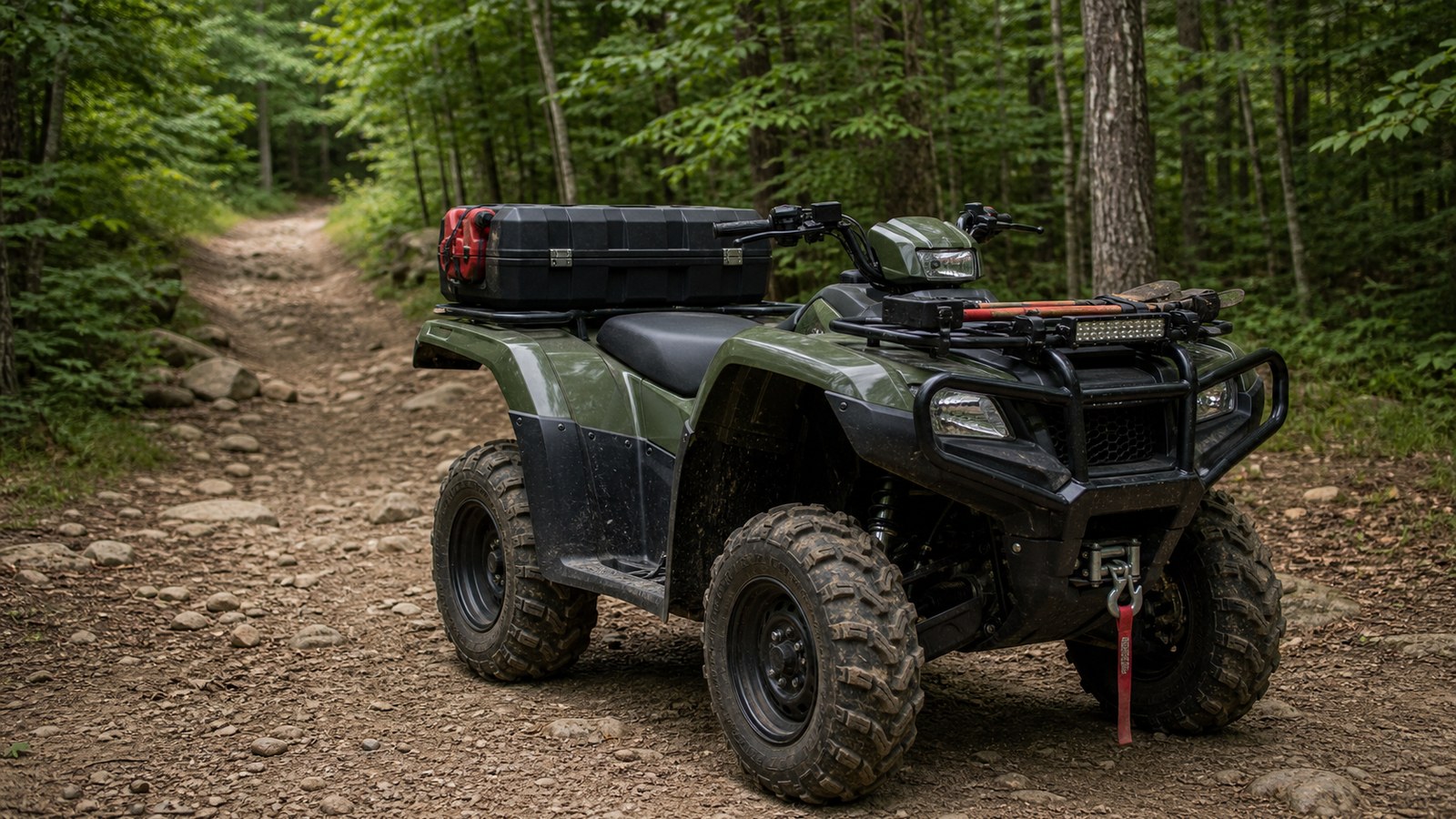
Skid plates, A-arm guards, handguards, bumpers, and winches can be useful when terrain justifies them. Protection should guard vulnerable parts without adding needless weight or blocking service access. A winch should be installed properly and used with safe rigging habits.
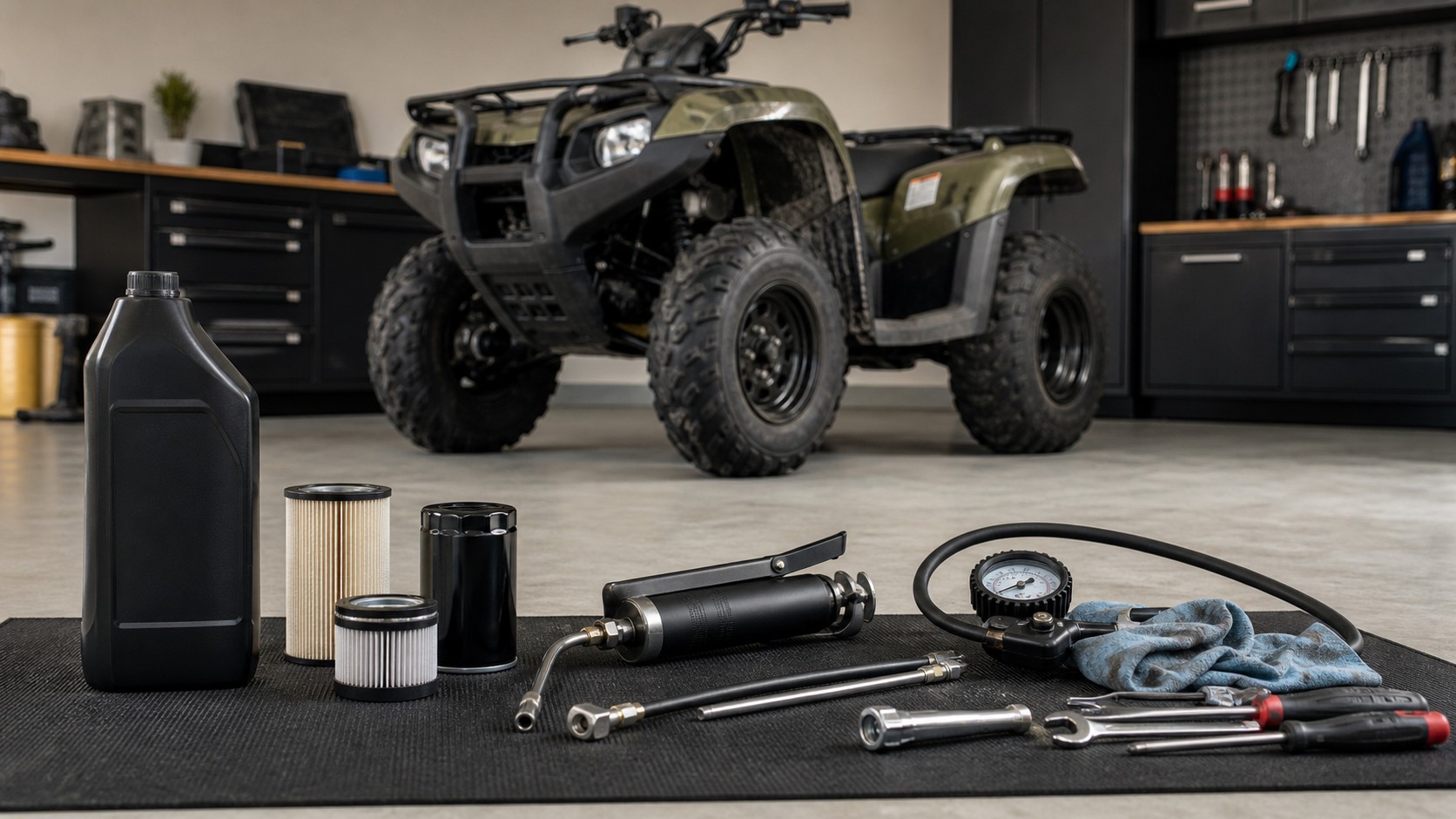
Recovery gear should match the ride. A tow strap, soft shackles, gloves, compact tools, tire plug kit, inflator, and first-aid kit can matter more than cosmetic accessories. Gear should be packed where it stays secure and reachable.
Ergonomics And Comfort
Trail comfort affects safety because tired riders make poorer decisions. Grips, lever position, seat comfort, vibration, wind, lighting, and body posture all matter on longer rides. A rider who can stand and move easily will handle rough terrain better than one locked into an awkward position.
Small adjustments can help. Correct lever angle, fresh grips, reasonable tire pressure, and secure storage can make a machine feel more controlled. Comfort does not need to mean soft or lazy; it means the rider can stay attentive.
Navigation And Communication
Trail setup includes knowing where you are and how to get help. A phone may be enough near home but unreliable in remote areas. Maps, GPS, radios, satellite messengers, or riding with a prepared group can be appropriate depending on location. Tell someone the plan before remote rides.
Communication also matters inside a group. Riders should know when to stop, where to regroup, and how to handle breakdowns. Good trail systems are social as well as mechanical.
Maintenance After Trail Riding
A trail setup is only as good as its next inspection. After dusty rides, check the air filter. After muddy rides, clean brakes, suspension, and driveline areas carefully. After rocky rides, inspect skid plates, wheels, tires, and steering. After long rides, check fluids and fasteners.
The goal is to find problems before the next trip. A loose bolt, slow tire leak, torn boot, or worn brake pad is easier to fix at home than at a trailhead.
Changing One Thing At A Time
Setup changes should be tested one at a time. If you change tires, suspension, tire pressure, and cargo layout all at once, it becomes hard to know what helped or hurt. Make one change, ride familiar terrain, and notice the difference.
This patient approach saves money. It prevents riders from stacking accessories that do not solve their real problem. The best trail setup usually comes from careful use, not one shopping spree.
Bottom Line
The best ATV trail setup improves control, protection, comfort, and preparedness for the rides you actually take. Tires, suspension, gear, and accessories should all serve that purpose.
Start with a healthy machine, choose terrain-matched upgrades, pack practical tools, and maintain the ATV after every hard ride. That system makes trail riding smoother and more confident.
FAQ
What is the first ATV trail upgrade?
For many riders, the first upgrade is maintenance: correct tires, tire pressure, brakes, air filter, and basic tools.
Are mud tires good for all trails?
No. Mud tires can be heavy and rough on hard trails. Choose tires for your normal terrain.
Should I install a winch?
A winch is useful for many utility and remote trail riders, but it should be installed and used correctly.
Building A Setup In Stages
A strong trail setup is usually built in stages. Start with maintenance, correct tire pressure, good brakes, and a clean air filter. Then add practical recovery and safety gear. After that, consider tires, protection, lighting, storage, and suspension changes based on actual trail experience. This order prevents expensive guesses.
Riders who modify everything at once may not know what helped or hurt. A new tire, pressure change, cargo box, and suspension adjustment can all change handling. One change at a time gives clearer feedback and better results.
Trail Setup For Rocks
Rocky trails reward underbody protection, durable tires, controlled speed, and careful line choice. Skid plates and A-arm guards can protect vulnerable parts, but they do not replace judgment. Tires need enough sidewall and puncture resistance for the terrain. Carrying a plug kit and inflator is wise.
Suspension should keep the ATV composed without bottoming harshly. A rider who pounds through rocks because the machine has protection will still bend parts eventually. The best rock setup combines armor with patience.
Trail Setup For Mud
Mud setup focuses on traction, clearance, recovery, and cleaning. Aggressive tires can help, but they add weight and may strain steering or clutching. A winch can be useful, but it should not encourage careless line choice. Radiator cleanliness and belt heat deserve attention after muddy rides.
Mud also affects brakes and bearings. After riding, clean carefully and inspect moving parts. A machine that looks tough covered in mud may be quietly wearing out underneath.
Trail Setup For Long Rides
Long trail rides need comfort, range, storage, and communication. Seat comfort, grips, lever position, vibration, and wind exposure all affect fatigue. Secure storage keeps tools and water from shifting. Navigation and communication gear become more important as rides get farther from the truck.
A long-ride setup should also include repair basics. Tire tools, straps, a compact tool kit, first aid, water, and weather gear can turn a problem into a delay instead of an emergency.
Bottom Line For Trail Setup
The best trail setup solves real problems from real rides. It improves control, protects vulnerable parts, supports the rider, and makes recovery and maintenance easier.
Start with a healthy ATV and add equipment carefully. A controlled, reliable setup is more valuable than a machine covered in accessories that do not match the terrain.
Setup Mistakes To Avoid
One common mistake is buying the most aggressive tire available without thinking about normal terrain. Another is adding heavy accessories before learning how the ATV handles stock. Riders also overload racks, mount gear too high, or skip suspension inspection because new parts are more exciting than maintenance.
A good setup should make the ATV easier to ride, not harder. If an upgrade increases steering effort, reduces braking confidence, blocks service access, or encourages riskier lines, it may not be the right upgrade for that rider.
Testing The Setup
After changing tires, suspension settings, storage, or protection parts, test the ATV in familiar easy terrain. Ride slowly, brake, turn, cross small bumps, and listen for rattles. Make sure cargo stays secure and controls remain easy to reach. A trailhead should not be the first test of a new setup.
Keep notes on what changed. Tire pressure, preload, added weight, and cargo location can all affect feel. A simple record helps the rider return to a better setup if an experiment makes handling worse.
Final Trail Setup Rule
Every trail setup should answer one question: does this make my normal ride more controlled, prepared, or reliable? If the answer is yes, the upgrade has a purpose. If the answer is only that it looks impressive, it can probably wait.
Balancing Preparedness And Weight
Trail riders need gear, but every item adds weight and takes space. Tools, water, first aid, tire repair, recovery gear, and communication equipment are useful because they solve real trail problems. Extra decorative accessories, oversized boxes, and unnecessary metal parts can make the ATV heavier without improving the ride.
Pack deliberately. Keep heavy items low, secure everything, and make sure emergency gear is reachable. A well-packed ATV feels organized and controlled. A cluttered one can rattle, shift, block movement, and make maintenance harder.
Final Setup Standard
A trail setup should be reviewed after a few rides, not treated as finished forever. Tires wear, suspension settles, cargo habits change, and riders learn what they actually use. Removing unnecessary weight can be as useful as adding a new part. Setup is a living system.
The rider should ask after each trip what worked, what was missing, and what made the ATV harder to control. That reflection keeps upgrades practical and prevents the machine from becoming loaded with parts that do not improve the ride.